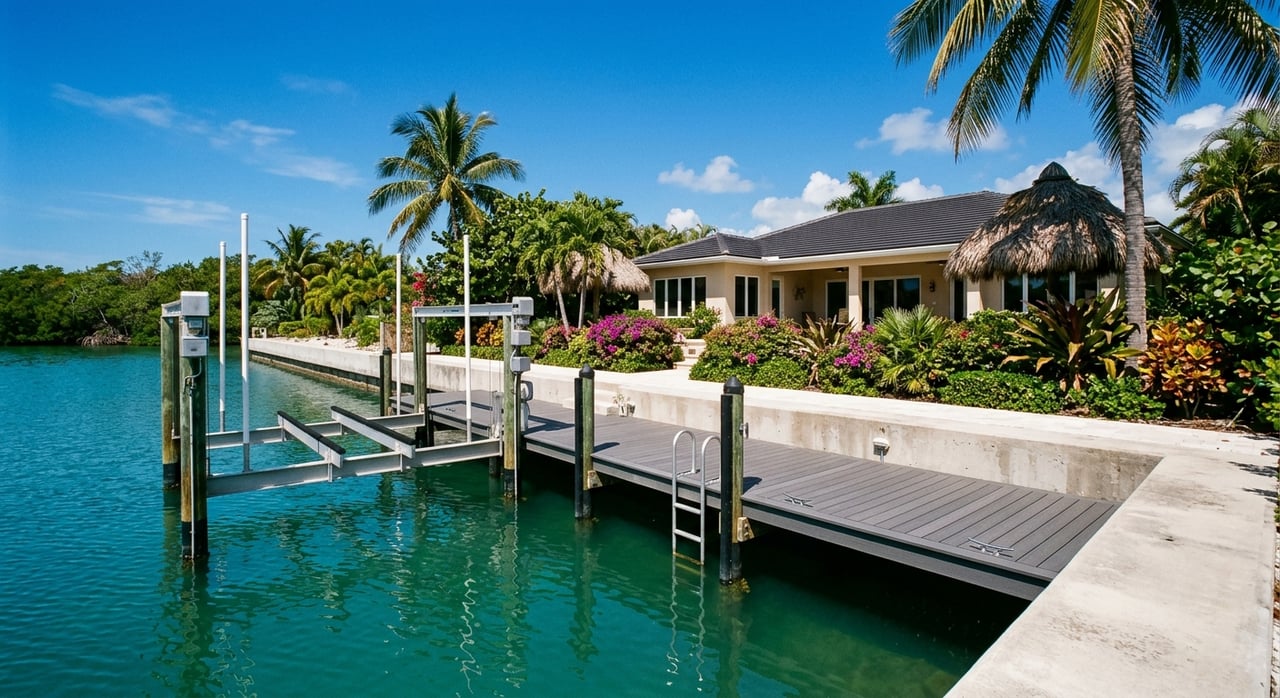
Dreaming about stepping out your back door, hopping on your boat, and heading into the Keys? In Key Haven, that vision can be very real, but canal living comes with details that matter just as much as the view. If you are thinking about buying or selling a waterfront home here, understanding canal access, dock setup, and boating realities can help you make a smarter move. Let’s dive in.
Key Haven Canal Living at a Glance
Key Haven sits within Monroe County’s Stock Island and Key Haven planning area, near mile markers 4 to 6. County planning documents describe Key Haven as a single-family residential area with a distinct community character from nearby parts of the Key West area.
That matters if you want a quieter, more residential waterfront setting. Key Haven tends to feel more like a dock-centered neighborhood than a tourist-driven destination, which is often a big part of the appeal for buyers who want everyday boating access close to home.
Why Canal Location Matters
Not all canal-front properties function the same way, even within the same neighborhood. In Key Haven, the canal itself can shape your boating experience as much as the house, dock, or lot size.
Monroe County’s canal restoration work shows that canal circulation and water quality vary from place to place. The county described the Key Haven canal system overall as fair to good, but also noted that at least one Key Haven canal, Canal 471, had poor circulation, low dissolved oxygen, stormwater inputs, and organic muck.
The key takeaway is simple: water exchange, canal mouth location, and depth matter. A home on one stretch of canal may offer a different boating experience than a home only a few streets away.
Canal Circulation Affects Daily Use
If you plan to keep a boat behind your home, you will want to know more than whether the property is technically waterfront. Canal orientation and flushing can affect water conditions, maintenance, and how the canal feels over time.
Monroe County offers a practical research tool for this. Buyers can search a property address in Google Earth through the county canal system and review canal name, depth, ranking, and related details before making an offer.
What Docks and Lifts Usually Look Like
Recent Monroe County permit records in Key Haven point to a common pattern in waterfront improvements. Records show concrete docks, boat-basin work, elevator-style boat lifts, lift electrical work, and seawall repairs.
In practical terms, many Key Haven waterfront homes appear to follow a familiar setup: a seawall-backed lot with a marginal dock and a lift. That does not mean every property is identical, but it does give you a useful picture of what you may see as you tour homes.
Look Beyond “Has a Dock”
A dock is only part of the story. When you evaluate a Key Haven waterfront property, you should also ask about:
- Dock condition
- Boat lift condition
- Lift electrical permits
- Seawall age and repairs
- Whether past work was properly permitted
This is especially important in the Keys, where canal and waterfront work can involve review from Monroe County, the Florida Keys National Marine Sanctuary, the U.S. Army Corps of Engineers, the Florida Department of Environmental Protection, and the South Florida Water Management District.
Boating Access from Key Haven
One of Key Haven’s biggest draws is that you are part of the larger Florida Keys boating environment. NOAA describes these waters as a mix of flats, mangroves, coral reefs, seagrass beds, and Gulf Stream access, supporting year-round boating, fishing, diving, and wildlife viewing.
For boaters, that means you are not just buying a canal lot. You are buying into a location that connects you to casual cruising, backcountry routes, and fishing opportunities that make the Keys lifestyle so distinctive.
Nearby Navigation Considerations
Boating access is exciting, but it also requires local awareness. NOAA’s Coast Pilot notes that the nearby Stock Island harbor channel leads to a large marina with fuel, water, ice, a launch ramp, storage, and repair services.
At the same time, Cow Key Channel between Stock Island and Key West is narrow, and NOAA advises local knowledge before entering. The same source notes fixed bridges with 9-foot vertical clearance and an overhead cable with 25-foot clearance, so air draft can be a major factor if you own a taller vessel.
Draft and Tides Still Matter
The Florida Keys are known for shallow water, and NOAA warns that even experienced boaters can be challenged by local depths. If you are shopping for a Key Haven home with a specific boat in mind, it is wise to compare the vessel’s draft and height to the routes you would actually use.
This is one reason charts, navigation references, and canal-specific depth research are so important during the buying process. A property can look ideal on paper but still be a poor fit for your boat if depth or clearance is too tight.
Fishing and Cruising Potential
For many buyers, canal living is about more than storage. It is about access to the water lifestyle that brought them to the Keys in the first place.
NOAA highlights the Florida Keys for flats fishing, backcountry fishing, reef fishing, and Gulf Stream fishing. From Key Haven, you are positioned within that broader boating ecosystem, which can appeal to everyone from casual cruisers to serious anglers.
That said, the best property for your lifestyle depends on how you use your boat. If you mainly want sunset cruises and quick day trips, your priorities may differ from someone focused on fishing access, larger-vessel handling, or frequent use in changing tide conditions.
If the Private Dock Is Not Ideal
Not every boat fits every canal-front lot. A property’s private dock may be too shallow, too narrow, or less convenient for a particular vessel.
Monroe County’s public ramp list shows alternative launching options in the Lower Keys, including Geiger Boat on Geiger Key and Gulf View on Big Coppitt Key. For some owners, that backup flexibility can be useful, especially if they keep more than one boat or use different types of watercraft.
Key Due Diligence for Buyers
If you are considering a Key Haven waterfront home, a careful review upfront can save time, money, and frustration later. The waterfront lifestyle is rewarding, but it works best when the property matches your boating needs and long-term comfort level.
Here are some of the biggest items to review:
- Canal depth at and near the property
- Canal circulation and water-quality context
- Dock, lift, and seawall permits
- Seawall condition and repair history
- Navigation route limits for your boat
- Flood resilience and drainage
- Insurance implications
- Pump-out and boating compliance rules
Resilience Matters Long Term
Monroe County reports that the Key West gauge rose about 3.9 inches from 2000 to 2017. The county is using sea-level projections and canal restoration planning to guide future adaptation.
For buyers, this makes resilience part of the waterfront conversation. It is smart to look closely at seawall condition, recent repairs, drainage, and whether the property feels prepared for long-term ownership in a changing coastal environment.
Environmental Rules Come with the Lifestyle
Living on a canal in the Keys also means understanding boating responsibilities. The Florida Keys are entirely within a federal No Discharge Zone, and Monroe County provides mobile and shoreside pump-out options.
The county also states that vessels anchored or moored for more than ten consecutive days must provide proof of pump-out. These rules are part of protecting local waters, and they are important for owners who want to enjoy the boating lifestyle while staying compliant.
Why Local Guidance Helps in Key Haven
Key Haven can be a great fit if you want a residential waterfront setting with private dock potential and access to the wider Keys boating world. But the best purchase decisions here usually come from looking beyond the listing photos and asking the right questions about canals, depths, permits, and navigation.
That is where experienced local guidance can make a real difference. If you are exploring canal-front homes in Key Haven or thinking about selling one, Halley Haack can help you evaluate the details that matter most in the Lower Florida Keys.
FAQs
What makes Key Haven different from other Key West-area waterfront neighborhoods?
- Monroe County describes Key Haven as a single-family residential area with its own community character, which supports a quieter, more residential waterfront feel.
Why does canal circulation matter for a Key Haven home?
- Canal circulation can affect water quality, maintenance, and day-to-day boating usability, so two waterfront lots in Key Haven may perform very differently.
What should you check before buying a Key Haven canal-front property?
- You should review canal depth, circulation, dock and lift permits, seawall condition, navigation limits, flood resilience, and insurance considerations.
Are most Key Haven waterfront properties set up for private boating access?
- Permit records suggest many properties use a seawall-backed layout with a dock and boat lift, though each property should be verified individually.
Can a larger boat create access issues in Key Haven?
- Yes. NOAA notes shallow waters, narrow channels, and fixed-clearance obstacles nearby, so draft and air height should be checked carefully against your planned route.
Are there public launch alternatives near Key Haven?
- Yes. Monroe County lists other Lower Keys launch options, including Geiger Boat on Geiger Key and Gulf View on Big Coppitt Key.
What boating compliance rules should Key Haven owners know?
- The Florida Keys are in a No Discharge Zone, and Monroe County says vessels anchored or moored for more than ten consecutive days must provide proof of pump-out.